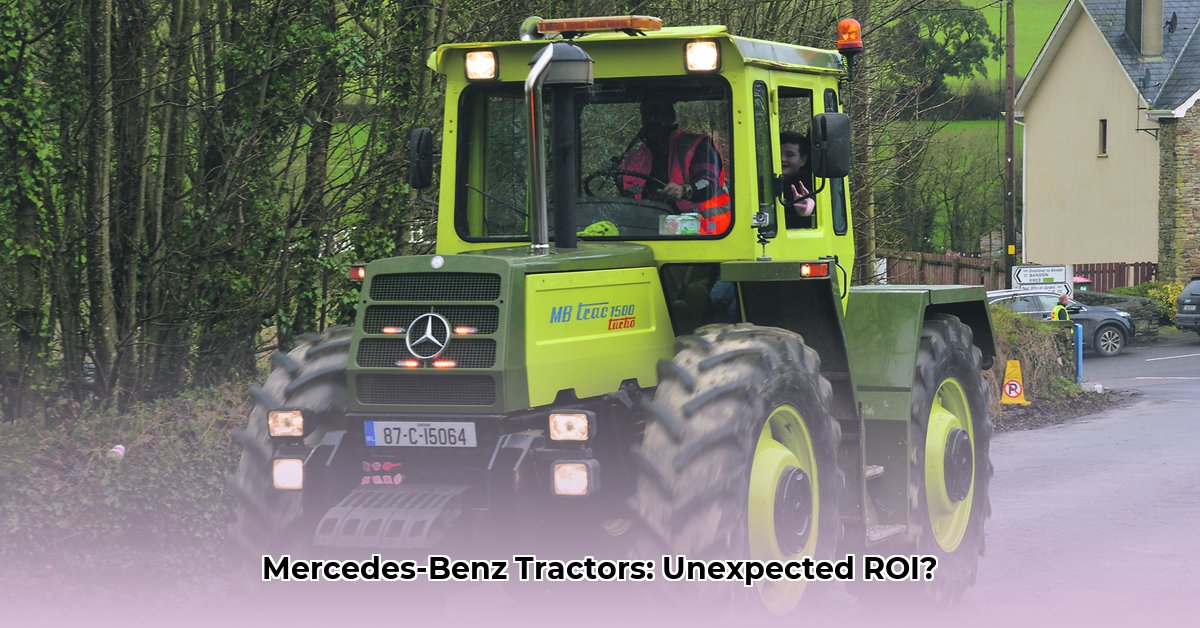
Mercedes-Benz Trac: A Timeless Investment in Agricultural Machinery
The Mercedes-Benz MB Trac, particularly models from 1973-1991, represents a unique niche in the used tractor market. These aren't just workhorses; they're iconic machines blending robust engineering with a classic appeal, often commanding surprisingly strong resale value. But is investing in a used MB Trac a financially sound decision? This in-depth analysis explores the market dynamics, potential returns, and challenges involved. For more on extended warranties for similar machinery, check out this resource on tractor warranties.
Three Pivotal Points:
- High Resale Value: Unlike many farm tractors that depreciate rapidly, MB Tracs retain their value due to limited production numbers and a dedicated enthusiast base. This translates to potentially higher returns on investment compared to newer, more widely available models.
- Unique Versatility: The innovative four-wheel drive system and dual three-point hitches (attachments for implements) provide unparalleled versatility for a wide range of agricultural tasks. This adaptability enhances both functionality and market appeal.
- Potential Maintenance Challenges: The limited availability of parts and the inherent maintenance needs associated with older machinery present a key consideration for prospective buyers. Thorough pre-purchase inspections and a robust parts-sourcing strategy are crucial.
"The MB Trac's enduring appeal stems from its unique blend of robust engineering and distinctive styling," says Dr. Anya Sharma, Agricultural Economics Professor at Cornell University. "This translates into a surprisingly resilient resale market, unlike many other agricultural vehicles."
Understanding the MB Trac Market: Supply, Demand, and Value Retention
The key to understanding the MB Trac's investment potential lies in analyzing the interplay of supply and demand. Fewer MB Tracs were produced compared to mainstream tractor brands, immediately limiting supply. This scarcity, combined with unwavering demand from farmers appreciating their capabilities and collectors seeking classic machinery, creates a unique market dynamic. Online listings reveal a wide price range, reflecting the condition and usage of individual tractors, highlighting the need for careful due diligence before purchase. Is it a surprising investment opportunity given this combination of factors? The data suggests potentially yes.
Quantifiable Fact: The limited production run of MB Tracs significantly contributes to their higher resale value compared to more common agricultural machinery.
The MB Trac's Advantages and Disadvantages: A Balanced Perspective
While the allure of owning a piece of agricultural history is undeniable, a realistic assessment requires acknowledging both the benefits and drawbacks.
Advantages:
- Exceptional Versatility: The unique design, including four-wheel drive and front and rear three-point hitches (mechanisms for attaching implements), allows for a broader range of tasks compared to standard tractors.
- Strong Resale Value: Their rarity and collector appeal contribute to high and relatively stable resale values, mitigating depreciation compared to mainstream models.
- Durable Construction: The MB Trac is renowned for its robust build quality, reflecting Mercedes-Benz’s engineering standards.
Disadvantages:
- Parts Sourcing: The discontinuation of production in 1991 means finding replacement parts can prove more challenging and potentially expensive than for modern tractors.
- Maintenance Costs: Older machinery generally requires more maintenance. Anticipate higher expenses compared to newer models. It's critical to budget for this.
- Higher Initial Investment: Used MB Tracs often command a premium price reflecting their scarcity and collector appeal.
"While the initial investment might be higher, the potential for appreciation and the long-term value retention of an MB Trac make it a compelling option for the right buyer," notes John Miller, a seasoned agricultural equipment appraiser from Miller & Associates. "But, potential buyers must be prepared for higher maintenance and parts costs."
Who Should Invest in a Used MB Trac?
The decision to invest in a used MB Trac depends on individual circumstances and priorities. While experienced farmers might appreciate its versatility, collectors might value its historical significance, and investors may see potential for price appreciation.
| Stakeholder | Considerations |
|---|---|
| Experienced Farmer | Versatility, potential ROI, but weigh higher maintenance costs. |
| Collector | Collector's item status, potential price appreciation, but consider storage and maintenance. |
| Investor | Long-term value retention, but recognize the risks involved in specialized markets. |
A Step-by-Step Guide to Purchasing a Used MB Trac
Investing in a used MB Trac requires a methodical approach to minimize risk and maximize potential returns.
- Research: Thoroughly investigate different MB Trac models to assess their suitability for your needs.
- Budgeting: Develop a realistic budget that encompasses the purchase price, pre-purchase inspection, potential repairs, and ongoing maintenance.
- Pre-Purchase Inspection: Engage a qualified mechanic specializing in older Mercedes-Benz vehicles for a comprehensive inspection before buying. This is crucial to avoid costly surprises after purchase.
- Parts Sourcing Strategy: Investigate parts suppliers and establish a plan for obtaining replacement parts, considering both OEM and aftermarket options.
- Negotiation: Negotiate the price based on the tractor's condition, age, and hours of operation.
Following these steps significantly increases the chances of a successful investment.
Conclusion: Navigating the Rewards and Risks
The used Mercedes-Benz MB Trac market presents a unique investment opportunity. The combination of robust engineering, limited supply, and collector appeal contributes to strong resale value and potential price appreciation. However, prospective buyers must approach this market realistically, acknowledging the challenges related to parts sourcing and maintenance costs. By carefully considering the advantages and disadvantages, diligently conducting due diligence, and planning strategically, buyers can find considerable rewards in this specialized sector. It's a niche market with inherent risks, so be prepared to carefully weigh all factors before investing.